
Unlocking Your Roots: Exploring Family History with Ancestry Mapping Software
Ancestry Mapping Software: Unveiling Your Family History
Exploring your family history has never been easier with the advent of ancestry mapping software. This innovative technology allows individuals to trace their roots, uncover hidden connections, and create detailed family trees with just a few clicks.
One of the key features of ancestry mapping software is its ability to analyze vast databases of historical records, census data, and genealogical information from around the world. By inputting basic details such as names, dates, and locations, users can embark on a fascinating journey through time to discover their ancestors.
These software tools often come equipped with advanced algorithms that can identify potential matches and links between different family members. This not only streamlines the research process but also helps users piece together the puzzle of their lineage more efficiently.
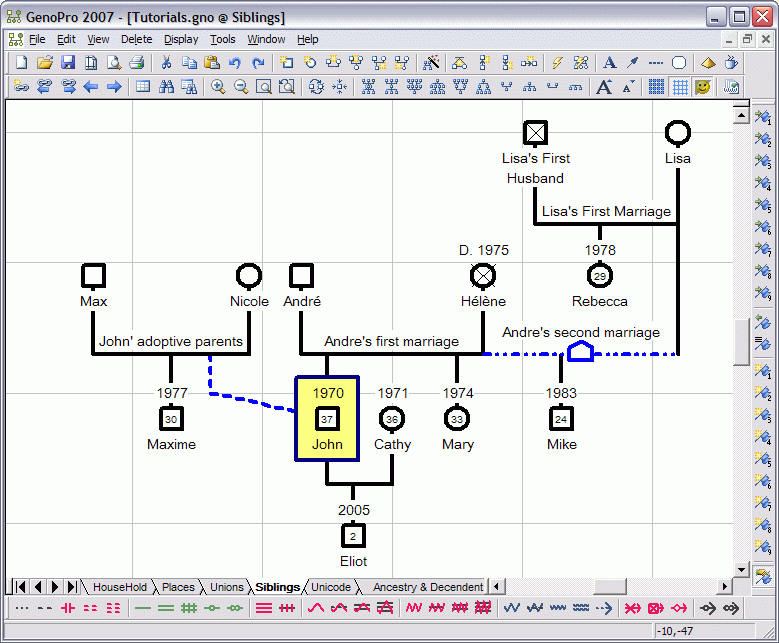
Moreover, ancestry mapping software offers interactive visualizations that allow users to map out their family tree in a comprehensive and visually appealing manner. From simple pedigree charts to intricate fan charts, these tools enable individuals to organize and display their genealogical information in a way that is both informative and engaging.
Another advantage of using ancestry mapping software is the collaborative aspect it brings to genealogical research. Many platforms allow users to share their findings with relatives, connect with other researchers, and even collaborate on building shared family trees. This fosters a sense of community among those interested in exploring their heritage.
In conclusion, ancestry mapping software is revolutionizing the way we uncover and document our family history. With its user-friendly interface, powerful search capabilities, and interactive features, this technology empowers individuals to delve into their past, connect with their roots, and create a lasting legacy for future generations.
5 Essential Tips for Choosing the Best Ancestry Mapping Software
- Choose a software with a user-friendly interface for easy navigation.
- Ensure the software offers comprehensive tools for organizing and visualizing family trees.
- Look for programs that allow collaboration with other users to expand your research.
- Verify that the software supports integration with DNA testing results for more accurate ancestry mapping.
- Consider the privacy and security features of the software to protect sensitive genealogical information.
Choose a software with a user-friendly interface for easy navigation.
When selecting ancestry mapping software, opt for a platform with a user-friendly interface to ensure seamless navigation and a hassle-free experience. A software with an intuitive design and clear layout not only simplifies the research process but also enhances your ability to explore and document your family history effectively. By choosing a tool that prioritizes ease of use, you can focus more on uncovering fascinating connections and building detailed family trees without being hindered by complex or confusing interfaces.
Ensure the software offers comprehensive tools for organizing and visualizing family trees.
When selecting ancestry mapping software, it is crucial to ensure that the platform provides comprehensive tools for organizing and visualizing family trees. Having robust organizational features can make the process of tracing your lineage more efficient and systematic. Look for software that offers options for creating detailed family tree structures, adding annotations or notes to individual profiles, and easily navigating between generations. Additionally, advanced visualization tools such as interactive charts and graphical representations can enhance the clarity and depth of your family history research, making it easier to understand relationships and connections within your ancestral lineage. By prioritizing software with these essential tools, you can streamline your genealogical journey and create a visually engaging representation of your family tree.
Look for programs that allow collaboration with other users to expand your research.
When exploring ancestry mapping software, it is beneficial to seek out programs that facilitate collaboration with other users to enhance your research efforts. By engaging with a community of like-minded individuals, you can broaden your perspective, gain access to new insights and information, and potentially uncover connections that may have eluded you otherwise. Collaborating with fellow researchers not only expands the scope of your genealogical exploration but also fosters a sense of camaraderie and shared learning, making the journey of discovering your family history even more rewarding and fulfilling.
Verify that the software supports integration with DNA testing results for more accurate ancestry mapping.
To enhance the accuracy of your ancestry mapping journey, it is essential to verify that the ancestry mapping software you choose supports integration with DNA testing results. By incorporating DNA data into your research, you can uncover deeper connections, validate family relationships, and gain insights into your genetic heritage. This integration not only enriches your family history exploration but also provides a more comprehensive and precise representation of your ancestral roots.
Consider the privacy and security features of the software to protect sensitive genealogical information.
When delving into the realm of ancestry mapping software, it is crucial to consider the privacy and security features offered by the platform to safeguard sensitive genealogical information. Protecting personal data, historical records, and family connections should be a top priority when using such tools. Ensure that the software employs robust encryption methods, secure login procedures, and data protection measures to prevent unauthorized access to your valuable genealogical data. By prioritizing privacy and security features, users can confidently explore their family history while keeping sensitive information safe from potential threats.