
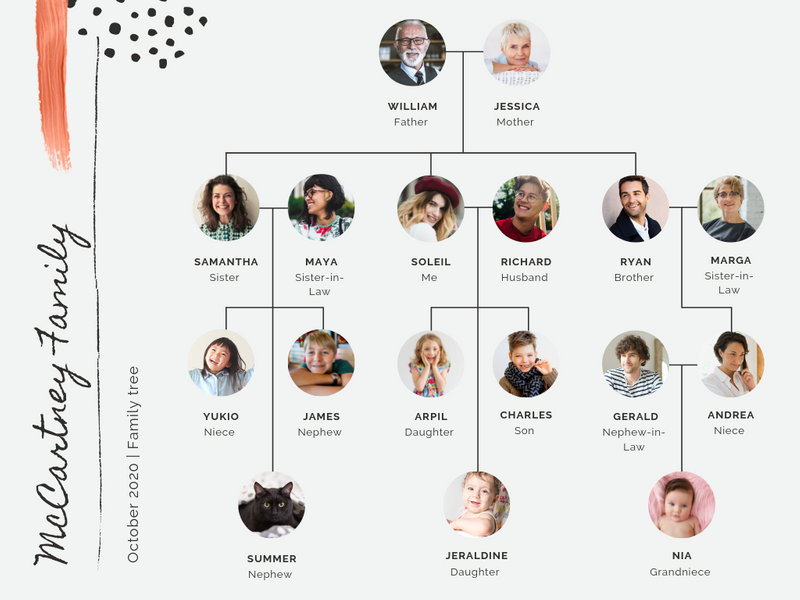
Family Tree, Family Tree, Family Tree: A Guide to Your Roots
How to Build a Family Tree
A family tree is more than a chart of names and dates. It is a way to explore the lives, relationships, and experiences that connect generations. Whether you are beginning your research or adding to a family history project, a thoughtful approach can help you build a tree that is both meaningful and reliable.
Start With What You Know
Begin with yourself and work backward. Write down your full name, birth date, and birthplace, then add your parents, grandparents, and other relatives. Talk with family members who may remember names, places, occupations, and stories. Even small details—such as a church someone attended or a town where a family lived—can provide helpful clues.
Keep track of where each piece of information came from. A relative’s memory is a valuable lead, but it may need to be checked against records. Label information as confirmed, uncertain, or still under investigation so that guesses do not become mistaken facts.
Look for Records
Documents can help confirm names, dates, and family relationships. Useful sources include birth, marriage, and death records; census schedules; obituaries; cemetery records; church registers; military files; land documents; and family letters or photographs. Local libraries, archives, historical societies, and genealogical organizations may hold materials that are not available online.
When researching a person, consider every version of their name. Spelling may have changed over time, and records may contain errors. Search by location and approximate date as well as by name. Comparing several independent sources can help resolve conflicting information.
Organize Your Findings
A family tree can be recorded in a notebook, a digital genealogy program, or an online service. Choose a format that makes it easy to update your work and attach source notes. Save copies of important documents and include enough details to find them again, such as the record’s title, repository, date, and page number.
As your tree grows, remember that each person’s story matters. Add short biographies, photographs, and memories when possible. A well-documented family tree can show not only who was related to whom, but also how families moved, worked, worshiped, and supported one another.
Share Family History Responsibly
Before sharing information about living relatives, ask for their permission and respect their privacy. When sharing photographs or documents, include context and credit the person or collection that provided them. Clear notes and careful sourcing make it easier for relatives and future researchers to understand and build on your work.
Keep Exploring
Building a family tree is an ongoing process. New records appear, family members share memories, and old clues can take on new meaning. Begin with one question, follow the evidence, and record what you learn along the way. Over time, your family tree can become a lasting connection to the people and places that shaped your family’s history.
Family Tree FAQs: Ancient Bloodlines, Royal Ancestry, and Tracing Your Roots
- What is the oldest bloodline on Earth?
- How many Americans have royal blood?
- How do I find my full family tree?
- What is the correct order of a family tree?
What is the oldest bloodline on Earth?
There is no single “oldest bloodline” on Earth: every living person’s family tree reaches back through countless generations, and human populations have always been connected through migration and intermarriage. Geneticists sometimes refer to “mitochondrial Eve” and “Y-chromosomal Adam,” the most recent common ancestors along specific maternal and paternal genetic lines, respectively. They lived at different times and were not the only people alive then, so they do not represent the first humans or one unbroken royal-style bloodline. Instead, these terms describe particular branches of the much larger, interconnected human family tree.
How many Americans have royal blood?
There is no reliable count of how many Americans have “royal blood,” because the phrase has no precise genealogical or genetic definition, and most Americans have not traced every branch of their family tree. Many people with European ancestry may descend from medieval royalty, since family lines spread widely over many generations, but a claimed royal connection should be supported by documented records linking each generation to a known royal ancestor. DNA tests alone generally cannot prove descent from a specific monarch.
How do I find my full family tree?
To find your full family tree, start with yourself and work backward by asking relatives what they know and collecting names, dates, places, photos, and family documents. Then verify each detail with records such as birth, marriage, and death certificates, census records, obituaries, church registers, and cemetery records. Search genealogy websites, libraries, archives, and local historical or genealogical societies, keeping notes on where each fact came from. No single source is likely to contain a complete family tree, so compare multiple records and treat uncertain connections as clues until they are confirmed.
What is the correct order of a family tree?
The correct order of a family tree depends on how you want to display it, but most trees begin with you and branch backward through your ancestors. In a typical layout, you appear at the bottom or center, your parents are placed above or beside you, and each earlier generation—grandparents, great-grandparents, and so on—extends farther outward. For a descendant chart, the order is reversed: it begins with an ancestor and branches forward to their children, grandchildren, and later generations. Whichever format you choose, label relationships clearly and keep each generation consistent.