
Unveiling Family History: Navigating Through Family Tree Group Sheets
The Significance of Family Tree Group Sheets in Genealogy Research
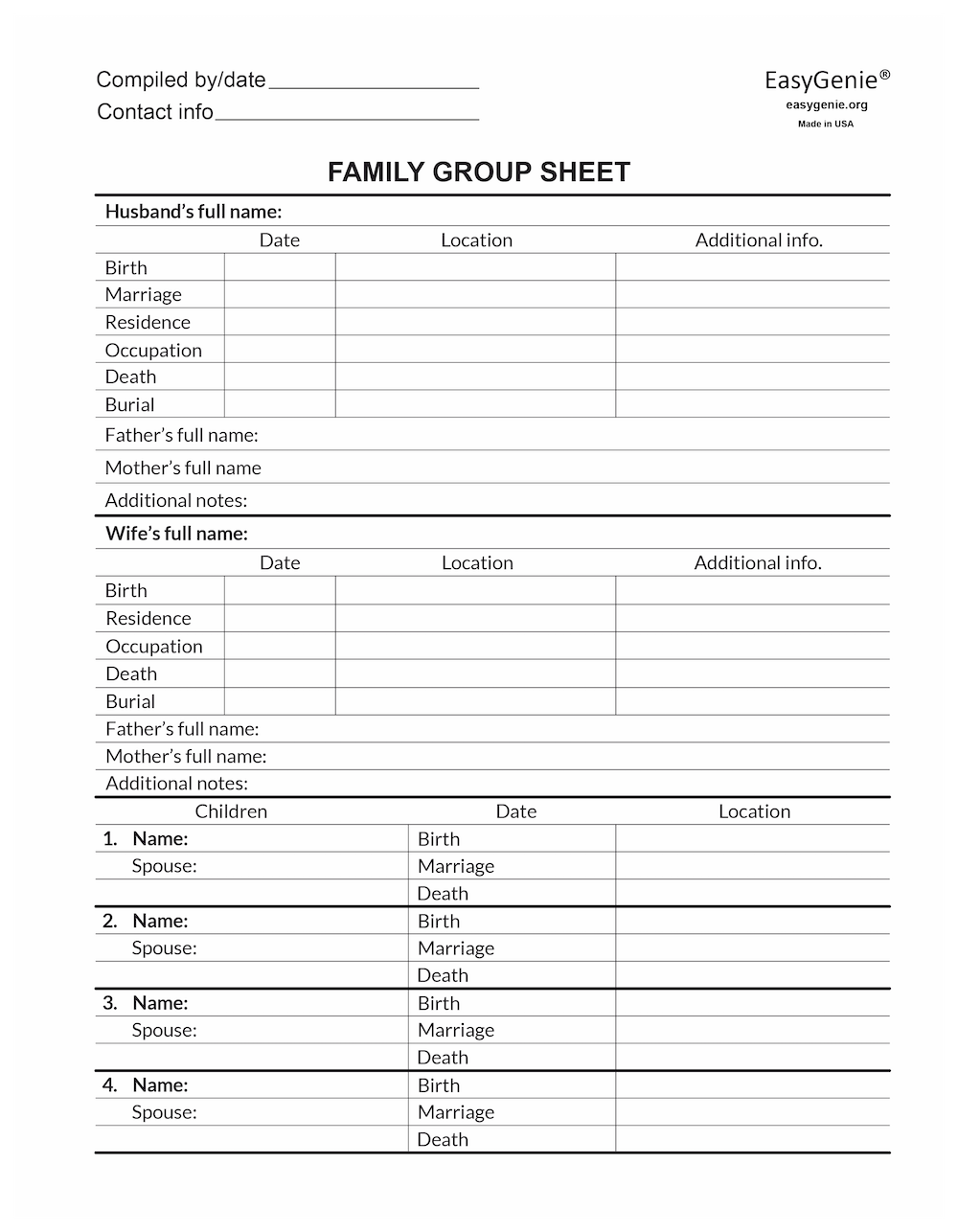
Family tree group sheets are essential tools in genealogy research, providing a structured way to organize and display information about family members within a specific lineage. These sheets serve as a valuable resource for individuals tracing their ancestry, offering a comprehensive overview of relationships, vital statistics, and historical details.
One of the key benefits of utilizing family tree group sheets is their ability to visually represent complex familial connections. By documenting multiple generations on a single sheet, researchers can easily identify patterns, gaps in information, and potential leads for further exploration. This visual representation not only aids in understanding the structure of a family but also helps in uncovering hidden stories and connections.
Moreover, family tree group sheets serve as a roadmap for genealogists to track their progress and organize research findings. By systematically recording details such as birth dates, marriage information, and locations, researchers can create a cohesive narrative of their family history. This organized approach not only streamlines the research process but also ensures that valuable data is preserved for future generations.
Another significant aspect of family tree group sheets is their role in facilitating collaboration among genealogists. By sharing these sheets with relatives or fellow researchers, individuals can exchange information, verify sources, and work together to fill in missing pieces of the puzzle. This collaborative effort often leads to new discoveries and insights that may have otherwise remained undiscovered.
In conclusion, family tree group sheets are indispensable tools for anyone delving into the world of genealogy. Their ability to visually represent familial relationships, track research progress, and foster collaboration makes them invaluable assets in uncovering and preserving one’s family history.
7 Essential Tips for Creating Comprehensive and Organized Family Tree Group Sheets
- Include full names of individuals
- Provide dates and places of birth, marriage, and death
- Use a consistent format for easy readability
- Include sources for information provided
- Organize the group sheet by generation
- Include relationships between individuals clearly
- Update the group sheet regularly with new information
Include full names of individuals
When creating family tree group sheets, it is crucial to include the full names of individuals to ensure accuracy and clarity in documenting familial relationships. By providing complete names, including first, middle, and last names, researchers can avoid confusion and ambiguity when identifying ancestors and relatives. Full names also help distinguish individuals with common surnames or similar given names, making it easier to trace lineages accurately. Additionally, including full names adds depth and richness to the family history narrative, honoring each individual’s unique identity and contribution to the ancestral lineage.
Provide dates and places of birth, marriage, and death
When creating family tree group sheets, it is crucial to include detailed information such as dates and places of birth, marriage, and death for each individual. These vital statistics not only help in accurately identifying and distinguishing between family members but also provide essential context for understanding their life journeys. By documenting these key events, genealogists can establish timelines, trace migrations, and uncover significant milestones in their ancestors’ lives. Additionally, including specific dates and locations adds depth and richness to the family narrative, allowing for a more comprehensive exploration of one’s heritage.
Use a consistent format for easy readability
When creating family tree group sheets, it is crucial to adhere to a consistent format for easy readability. By maintaining uniformity in the layout, font style, and organization of information, researchers can enhance the clarity and accessibility of their family tree data. A consistent format not only improves the overall visual appeal of the group sheets but also streamlines the process of navigating through different generations and relationships. This practice ensures that important details are presented in a structured manner, making it easier for both the creator and viewers of the family tree group sheets to interpret and analyze the data effectively.
Include sources for information provided
When creating family tree group sheets, it is crucial to include sources for the information provided. By citing sources such as birth certificates, marriage records, census data, and other primary documents, genealogists can establish the credibility and accuracy of their research. Including sources not only adds legitimacy to the information presented but also allows others to verify the data and conduct further investigation. This practice of citing sources ensures that the family tree remains reliable and serves as a solid foundation for future generations to build upon.
Organize the group sheet by generation
When creating family tree group sheets, a valuable tip is to organize the information by generation. By structuring the group sheet in this way, researchers can clearly delineate each ancestral line and establish a logical flow of information from one generation to the next. This organization not only helps in visualizing the familial connections more effectively but also simplifies the process of tracing and documenting the lineage accurately. Grouping individuals by generation allows for a systematic approach to genealogy research, enabling researchers to focus on specific branches of the family tree while maintaining a comprehensive view of the entire lineage.
Include relationships between individuals clearly
When creating family tree group sheets, it is crucial to include relationships between individuals clearly and concisely. Clearly indicating the connections between family members helps to provide a comprehensive understanding of the lineage being explored. By clearly outlining relationships such as parent-child, sibling, spouse, and other familial ties, researchers can visualize the structure of the family tree more effectively. This clarity not only enhances the readability of the group sheet but also ensures that the intricate web of relationships within the family is accurately represented for future reference and research purposes.
Update the group sheet regularly with new information
Regularly updating your family tree group sheet with new information is crucial for maintaining the accuracy and relevance of your genealogical research. By consistently adding newly discovered details, such as births, marriages, and other significant events, you ensure that your family tree remains up-to-date and reflective of the latest findings. This practice not only helps you track the evolution of your family history but also allows you to identify potential connections or discrepancies that may require further investigation. Keeping your group sheet current ensures that your genealogical research continues to grow and expand with each new piece of information uncovered.